From Glass to Needlework by Sasha Ward

Window of the risen Christ and detail showing the little gold head, John Hayward, 1968.

Window of the risen Christ and detail showing the little gold head, John Hayward, 1968.

There’s lots of good twentieth century stained glass in the Church of St Mary and St Bartholomew, Hampton in Arden in the West Midlands. The window shown here is by John Hayward - with the unmistakable figures in profile, some hidden in backgrounds made of crisscross lines on blocks of colour. As usual, I prefer the details and the minor characters, for example the little gold head under Christ’s arm, to the overall composition. But the window looks great in its setting (below) with a wonderful bit of coordinated interior decor (how un church like!) in the embroidered cushions on the long bench leading up to the window.

View of the church interior, looking east from the entrance door, showing long bench on the south wall.

View of the church interior, looking east from the entrance door, showing long bench on the south wall.

There is an impressive information booklet that goes with the needlework, such as you never get for a stained glass window. Not only subject matter - “it depicts the risen Christ, holding aloft the flag, with his angels going out to bring the light of the resurrection to the souls of the departed” - but also details on the design and manufacture, with acknowledgements not only to the donors but also to the frame maker, design tracer, upholsterer and suppliers of the materials (John Cordwell, Robin Watkin, Parkes of Earlsdon and stitches of Solihull). The village needlewomen tell us they made a panel each and the project lasted from 2002-5 (!!!). They write “We were once again privileged to have the inspiration of the Reverend John de Wit, our priest in charge 1994 - 2004, for the design. It was decided that this should link with the window and thus bring the while concept into the body of the church….. One of the challenges has been to maintain the continuity of the designs because they flow from one panel to another and this had to be so exact for the joining of the sections” The concept and the linear version of the design works really well, although inevitably the bench was covered with leaflets and boxes when I was there.

Glass angel by John Hayward, needlepoint angel by Janet Hardcastle

Glass angel by John Hayward, needlepoint angel by Janet Hardcastle

It is interesting to compare the stained glass angels to the needlepoint ones, the hand positions show you which is which. More from the booklet “The canvas on which we worked uses ten stitches to the inch, which made the depiction of the details very taxing. For instance, one stitch in the face of an angel can make a huge difference to the expression!”

Needlepoint angels by Marjorie Iles and Janet Griffiths
Needlepoint angels by Marjorie Iles and Janet Griffiths

Christ Church, Southgate N.14 by Sasha Ward

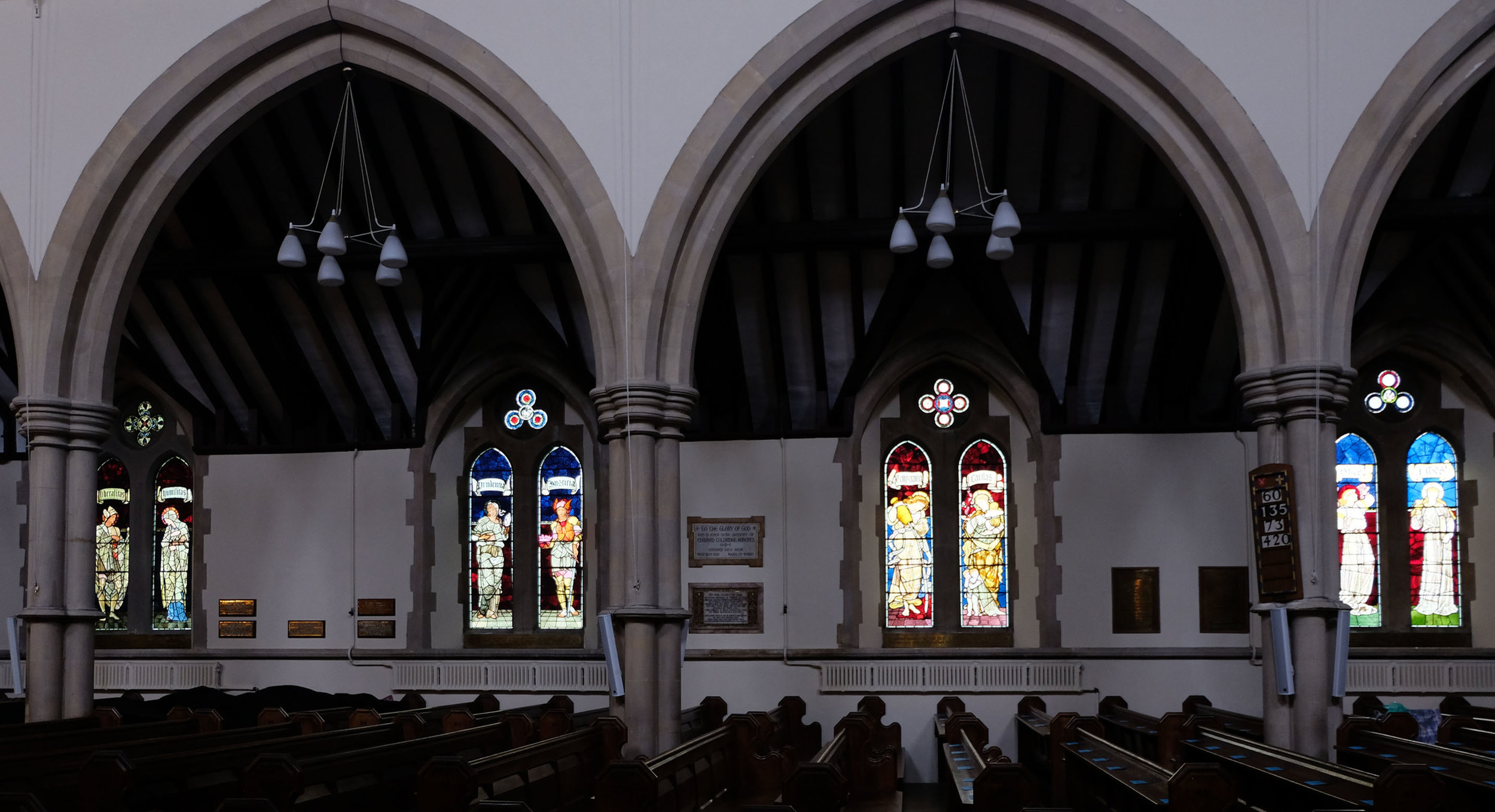
North Aisle, left to right: Liberalitas & Humanitas (1899), Prudentia & Justitia (1885), Temperentia & Caritas (1876), Spes & Fides (1876)

North Aisle, left to right: Liberalitas & Humanitas (1899), Prudentia & Justitia (1885), Temperentia & Caritas (1876), Spes & Fides (1876)

I’ve rediscovered my enthusiasm for the stained glass of Morris & Company after visiting Christ Church in Southgate, North London. The windows in this church cover every period of the firm’s production from 1861 until the twentieth century, with designs by William Morris, Dante Gabriel Rosetti, Ford Madox Brown, Philip Webb and Edward Burne-Jones. The photos I’d seen were mainly those rare early windows designed, made and painted by the partners in the original firm, in the Victorian Medieval style i.e small figures engulfed by patterned borders and backgrounds. But the ones I really liked are shown in the photo below. There are pairs of figures in all the windows of the north and south aisle, they look great from a distance because of this consistency of design and are full of amazing detail and colour. Burne-Jones designed all except the figure of St. Francis which is the latest and is by Henry Dearle (1911).

Left: Detail from Liberalitas. Right: The figure of Justitia

Left: Detail from Liberalitas. Right: The figure of Justitia

The eight figures in the north aisle are all fantastic examples of the firm’s stained glass style as it developed, with gorgeous patterned backgrounds and drapery in Liberalitas and Humilitas (above left) and the use of amazing coloured glass, particularly in Justitia (above right.)

The next two pairs of windows were made earlier, the figures of Temperentia and Caritas are flowing and curvy, with a pair of astonishing babies, shown below left. The earliest two, Spes and Fides are plainer, calmer and they let in a lot more light.

Left: Babies at the feet of Caritas. Right: The figure of Fides

Left: Babies at the feet of Caritas. Right: The figure of Fides

South Aisle, left to right: Patientia & Pax (1909), Martha & Phebe (1903), King David & St Francis (1911), St Peter & St Paul (1865).

The figures on the south side are all much darker, particularly the matching backgrounds. Below are details of two of the figures, with beautifully painted faces, hands and clothes. In the set of windows in this church the faces are all different and quite mesmerising. At the end of the row (above right) are earlier windows of Saints Peter and Paul with wildly patterned surrounds, they are figures familiar to me from other Morris & Co windows.

Left: The figure of Patientia. Right: The figure of Martha.

Left: The figure of Patientia. Right: The figure of Martha.

The other pair of windows that show the designs of EBJ at his flowing best are high up on the north wall of the chancel, apparently the first ones where he used photographic enlargement of drawings to prepare the stained glass cartoons. All in lovely light colours and with a great detail of a rip over the knee of the ragged girl (below right) visible even from a distance.

North chancel: Left, Dorcas. Right, The Good Samaritan (1876).

North chancel: Left, Dorcas. Right, The Good Samaritan (1876).

Approach corridor by Sasha Ward

Vinyl/glass/vinyl window at Manchester Children’s Hospital: 1800 mm square.

Vinyl/glass/vinyl window at Manchester Children’s Hospital: 1800 mm square.

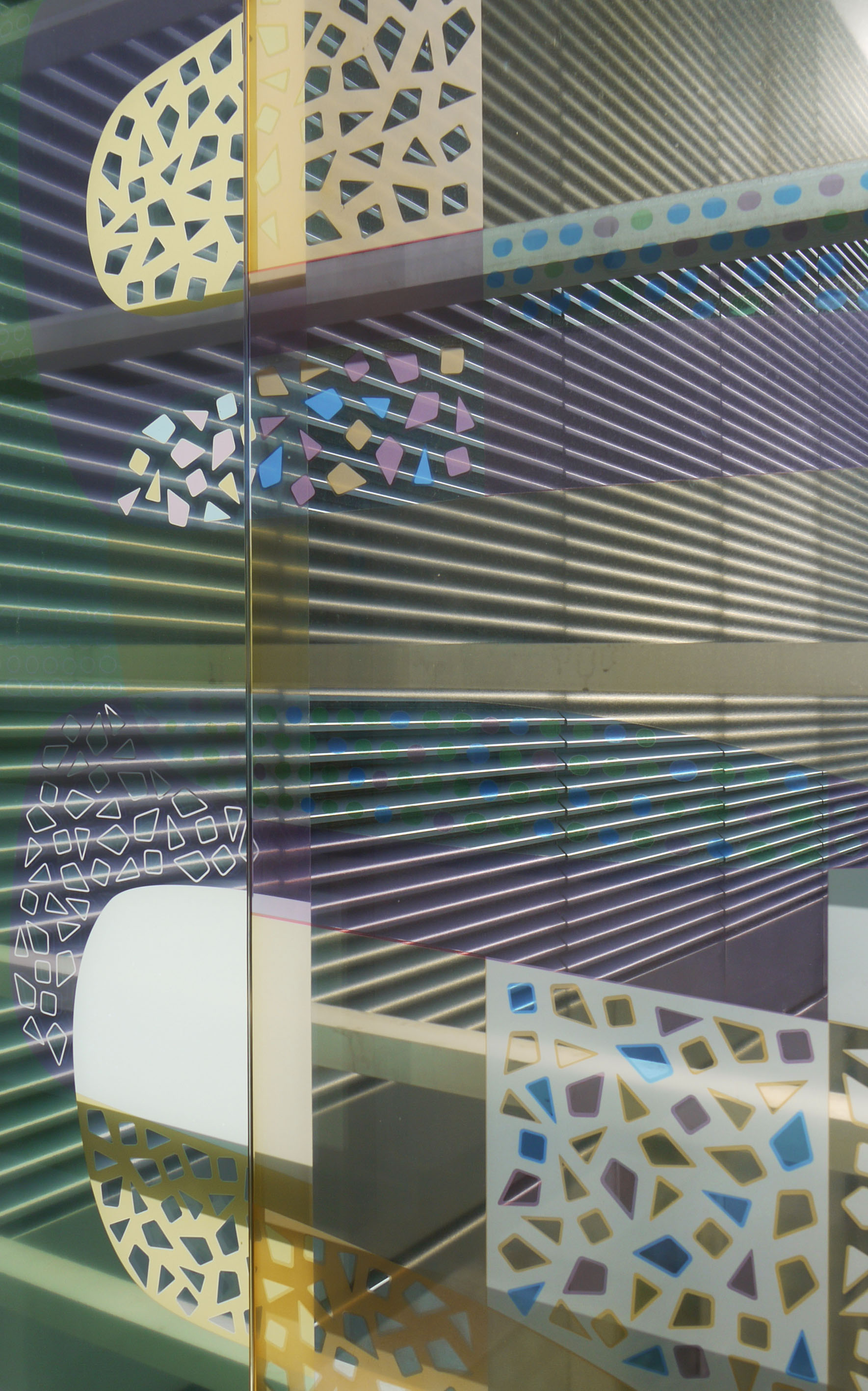
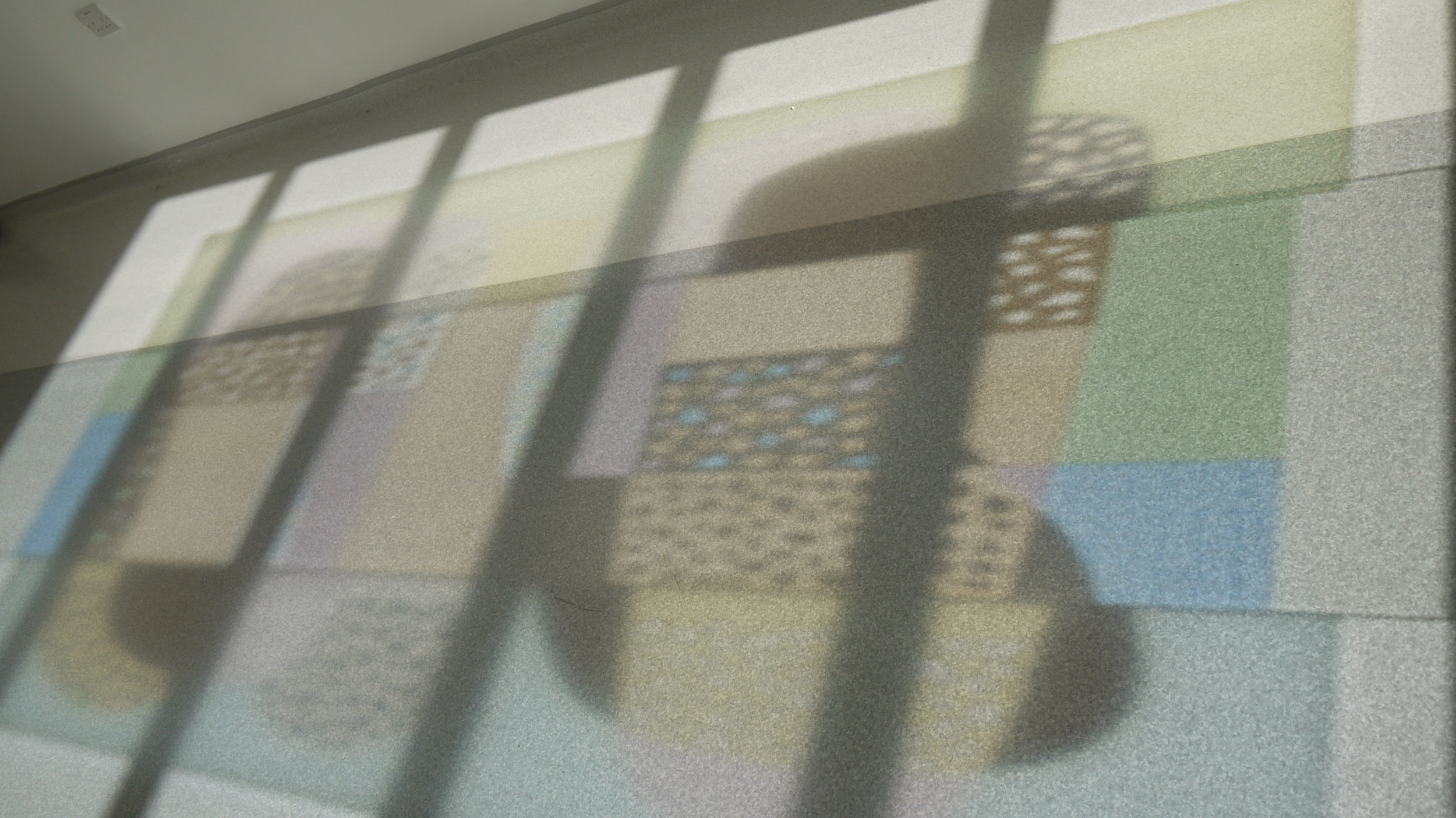
Sunburst was not the title intended for the piece I have just installed in a white corridor leading to the paediatric mortuary at Manchester Children’s Hospital. However in the record breaking February sunshine this week and framed by the corrugated sides of the hospital building outside, it glows like a gentle star. As you can see in the photo below left, dramatic shadows and colours are cast on to the floor - surely the best thing about stained glass. Evidently I hadn’t dared imagine the effect would be so good as the collage of my design on to the photo of the space shows (below right).

Left: Feature window at the entrance to the paediatric mortuary. Right: Photomontage of the same space.

Left: Feature window at the entrance to the paediatric mortuary. Right: Photomontage of the same space.

This feature window is part of a commission for artworks in the series of rooms that make up the mortuary. It was almost two years ago when I designed the work following consultation with staff and bereaved families and to a brief that asked for the artwork to be abstract, with no representational imagery and using gentle colours and shapes. Last month I wrote about the colour scheme and the door vision panels; there will be more on the wall designs (digitally printed wallpaper), wall panels and viewing windows when the new furniture arrives to complete the rooms later on.

Below is a page of sketches showing the development of the design for the feature window. I was concerned about working with - rather than fighting against - the horizontal bars and not blocking the wonderful view.

12 sketches showing development of the design

12 sketches showing development of the design

Window detail: vinyl on the left in this picture.

Window detail: vinyl on the left in this picture.

The feature window is made up of a hefty piece of laminated and toughened printed glass (2500 x 780 x 17mm) flanked by two pieces of printed transparent vinyl applied to the surface of the existing window. I hadn’t tried this combination up against each other before, and was apprehensive that the colours on the vinyl would look weak against the sparkling enamels on the glass. But they compliment each other well, the white/shadows are just as strong, and the pattern cast on the floor is colourful but subtle.

floorsm.jpg

Almudena Cathedral, Madrid by Sasha Ward

almudena 9a.jpg

This is one of a series of ten windows designed by the Spanish artist Manuel Ortega (1921 - 2014) for Almudena Cathedral, Madrid in 1998. I love the design - in every one the ground is broken up with geometric lines into colour blocks, some of these contain figures with painted faces, hands and feet. Each window is in its own side chapel and is complimented by a painting or artefact below. They work brilliantly in the spaces, with subtle colours and spooky faces glowing in the gloom.

Three of the side chapels in the nave of the cathedral.

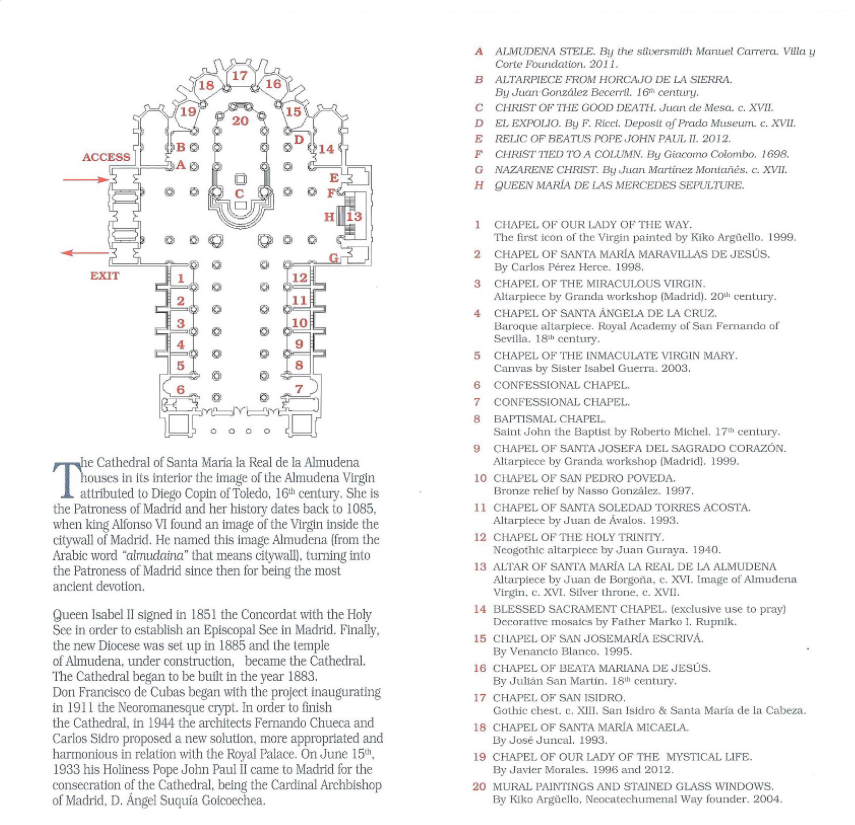
I haven’t found out any more about the windows, and the information panels in this recently decorated cathedral leave them out altogether. On the plan of the cathedral below they are in the chapels numbered 1 -5 and 8 -12, but agin no mention of the stained glass here!

Screen Shot 2019-02-04 at 21.27.09.png

I didn’t have my zoom lens with me for close ups, but photographed every window and, using the subject matter listed in the plan above, I think I’ve got my photos in the right order below. As you can see they all have a geometric dove in the top hexagonal light, and a pair of angels on either side below. There are lovely variations in the colouring in of the triangles around these flying figures, with no two quite the same.

The window in the chapel of the Miraculous Virgin is shown closer below. You can see the large areas of unpainted textured (bathroom style) glass with inserts of simple painting that give those blocks a 3-D quality. These are unorthodox techniques and I am reminded again that it’s the design that counts, and that here you are looking at the work of a significant artist.

Colour sequence by Sasha Ward

This is part of a project I have been doing in the paediatric mortuary at Manchester Childrens’ Hospital. Over the past two years I have designed artworks for a suite of five rooms following extensive consultation with bereaved parents and hospital staff and negotiated with manufacturers and the hospital estates department to get the works, made of vinyl and glass, installed.

Vinyl detail:  Double doors leading to the mortuary:  Locked doors in the corridor

Vinyl detail: Double doors leading to the mortuary: Locked doors in the corridor

The overall scheme is now starting to come together with new colours on the walls and coloured vinyl on the door vision panels. These make an impact that is much larger than their size and help you find your way through the maze of windowless rooms that make up this backwater of the hospital building. The design on the vinyl is simple, the complicated part is the layered printing so that one half of each panel is translucent and the other is opaque i.e. a colour printed over a white layer. In the detail shown above left the blue is opaque and the yellow is translucent therefore it glows as you approach the double doors to the (badly sign posted) mortuary. In the next part of the corridor there is a pair of locked doors so the vinyl on these has a different design that is totally opaque - attractive but hopefully uninviting (above right).

Entrance door:  Babies’ room door: Children’s room door with room light on and off

Entrance door: Babies’ room door: Children’s room door with room light on and off

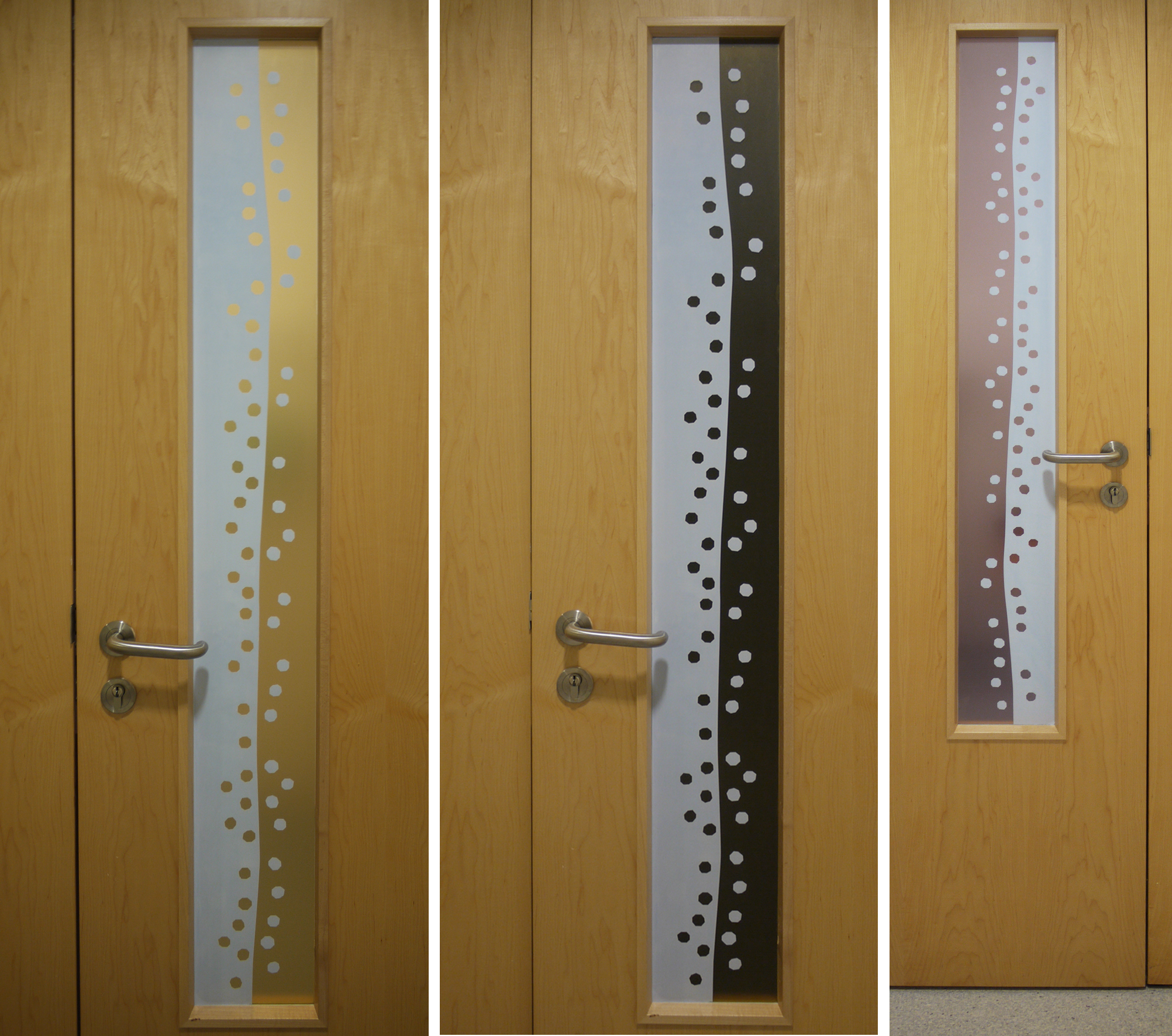
The main pattern is ordered, simple and gentle rather than geometric and rigid. The entrance door to the waiting area is green/blue, this leads to the babies’ room (blue/yellow) and the children’s room (yellow/green)- all shown above. The back door of the babies’ room is also blue/yellow but with the translucent and opaque sides reversed, while the back of the children’s room is blue/pink - all shown below. When the light behind the door is off you can see the colour on the opaque part of the design, while the translucent part appears very dark. This is a technique I have borrowed from my glass designs where I use textured opaque areas so that some colour is visible in a variety of light conditions. So far I’m happy with the installation which is still in progress - the colours are spot on.

Door at back of babies’ room with lights on and off: Back of children’s room

Door at back of babies’ room with lights on and off: Back of children’s room