Glass Enamel Samples by Sasha Ward

Enamels in the studio

Enamels in the studio

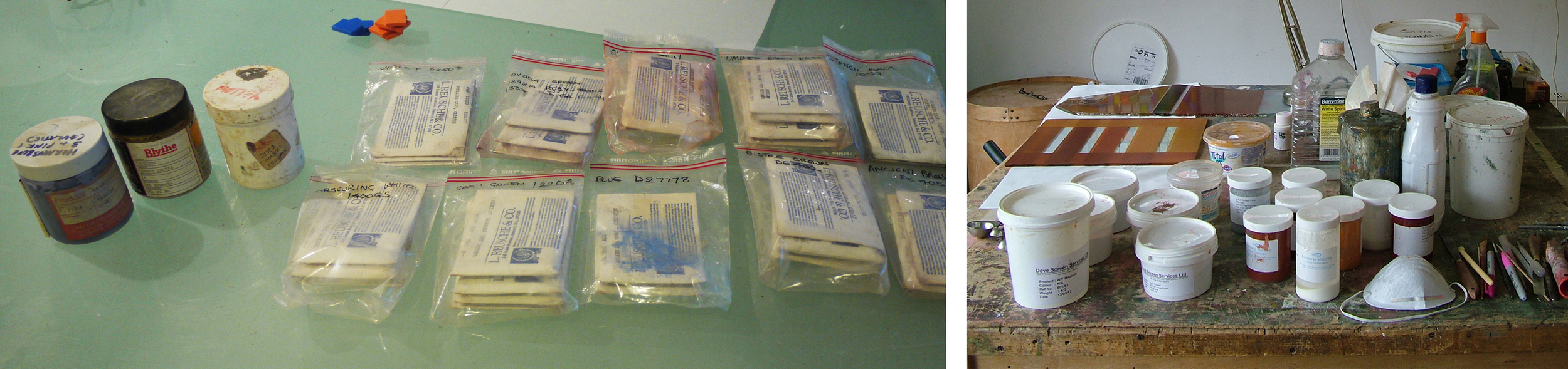
Since I started using glass enamels in 1984 (date verified by original Blythe pot above) I have sampled the products of most enamel suppliers. I have just tried out some ancient looking envelopes of Reusche enamels, very fine but expensive, given to me by a colleague. I save my old enamels for small projects as many of them are now unobtainable because of the elements, including lead, that they contain.  In my favourite range I have completely used up some colours - my best ever test strips are on the windowsill below right, next to the new Reusche samples. 

Colour samples in my studio window                                                    Best ever enamel test strips &amp…

Colour samples in my studio window. Best ever enamel test strips & recent (smaller) Reusche strips.

The test pieces, which I sometimes vary by using dots or another layer of colour going the other way, look great in the studio windows but because they are usually on 6mm (thick) glass, it is hard to use them in stained glass commissions. They have recently been sorted or chucked during the great studio clear out. For our new shed door (below left) I used fifteen sample panels of the mostly brown enamels from a job shown in the photo at top right - complete with notes on colour mixes scratched through the paint. For one of my first ever stained glass commissions (below right) I made fake sample strips, this time texture added with acid etched stripes, an even more deadly substance that I no longer use.

Our shed door, 2014                                                                 &nbsp…

Our shed door, 2014. Detail from front door commission, 1988
View From The Window by Sasha Ward

If in doubt, I draw the view from the window. Last weekend (of the attacks) I was staying in a friend's flat in Paris, being very critical of the view from the windows on to the blank wall of a block of flats less than three metres away (drawing 1). However, as shown in drawing 2, we ruined the view from the bedroom window at home in Marlborough by building our tall studio in front of it. Looking at the little patch of sky that remains at top left, I remembered another sketchbook page (drawing 3) drawn from my bedroom at West Dean House last January, where I had to peer between the thick flint walls and the courtyard castellations to find my view.

drawing 1, Paris.  drawing 2, Marlborough. drawing 3, West Dean House, Sussex

drawing 4, Loch Lomond.  drawing 5, Lewis. drawing 6, Berneray

There are window drawings in all of my sketchbooks, here I've chosen three Scottish ones from 2011 when I did a commission on the Isle of Lewis. On the way there was a hotel window near Loch Lomond, some tree tops and lots of sky visible (drawing 4). Then the ugly bungalow we stayed in on Lewis had only one high window facing south towards a magnificent view of The Minch (drawing 5) - invisible when you were sitting down at the kitchen table. Drawing 6 is a view from the kitchen window of the most beautiful place I have ever stayed, that is undisputedly the hostel on the Isle of Berneray.

Words and Pictures by Sasha Ward

Details from the patchwork windows in the North Aisle

These photos are all from the ancient parish church of Saint Michael and All Angels in Ashton-under-Lyne, where the restored fifteenth century glass has been installed at eye level in the North and South Aisle windows. There are beautifully made patchwork style windows in the North Aisle, with some mysterious figures, a useful inscription and the five pointed star from the coat of arms of the Assheton family.

The set of four windows in the South Aisle depicts the life of Saint Helen, and in windows 3 & 4, members of the Assheton family who donated them. 

Window 3 South Aisle: Saint Helen above, Asshetons below.

Detail: lower central panel, window 3

I'm not usually that bothered about the iconography,  but these portraits grabbed my attention initially because of the huge black family stars on their stomachs. Then the inscriptions are easy to read, I could even make out the names of Thomas Assheton and his wives Agnes, Elizabeth and Anne surrounded by gorgeous painted patterns.

Two of the lower panels in window 2 that depict the life of Saint Helen, translations below

Hic inveniebant tres cruces an aliis et veram crucem non discernebant                                                            Here they found three crosses and could not tell which was the true cross

Hic crucem veram petentes fodiunt                                                                                                                      Here they dig in search of the true cross

I found these translations in a great guide book to the Saint Helen windows by members of The Friends of Ashton Parish Church with not only word by word translations of each inscription but also grammatical notes - so useful for latin revision.

Window Sills by Sasha Ward

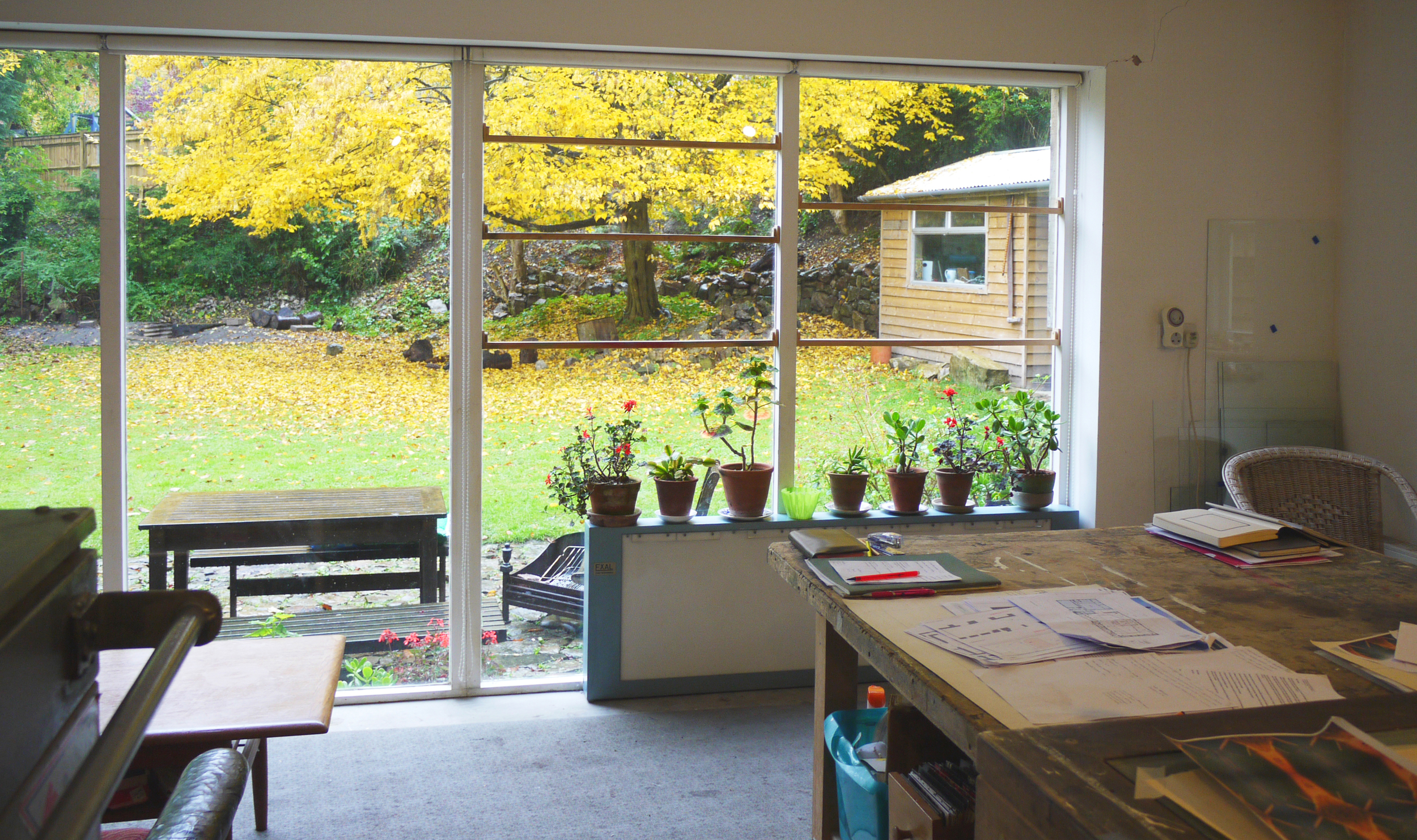
The back of the tidy studio, no coffee cups or towels in sight                            Glass off cuts on window sill

The back of the tidy studio, no coffee cups or towels in sight                Glass off cuts on window sill

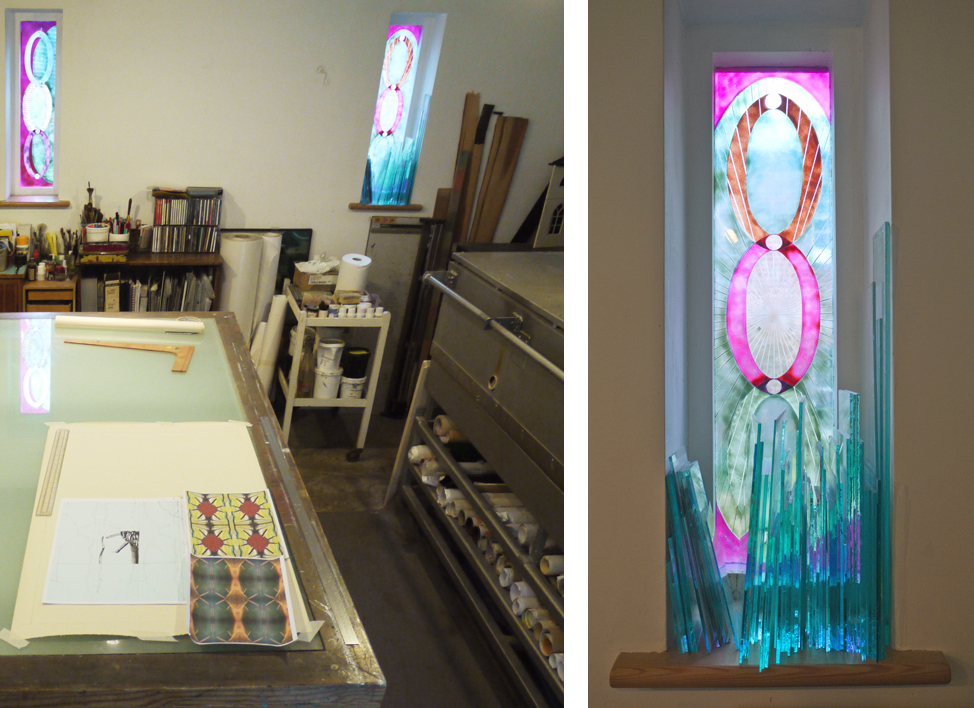
I've spent a lot of time recently tidying up my studio. One of my aims was to make the space into a setting for photographs of work in progress with nothing awful - like plastic bags on the lawn or towels on the kiln - in the background. Instead of untidy piles, my things are sorted into neat rows under the tables and on my shelves and window sills.

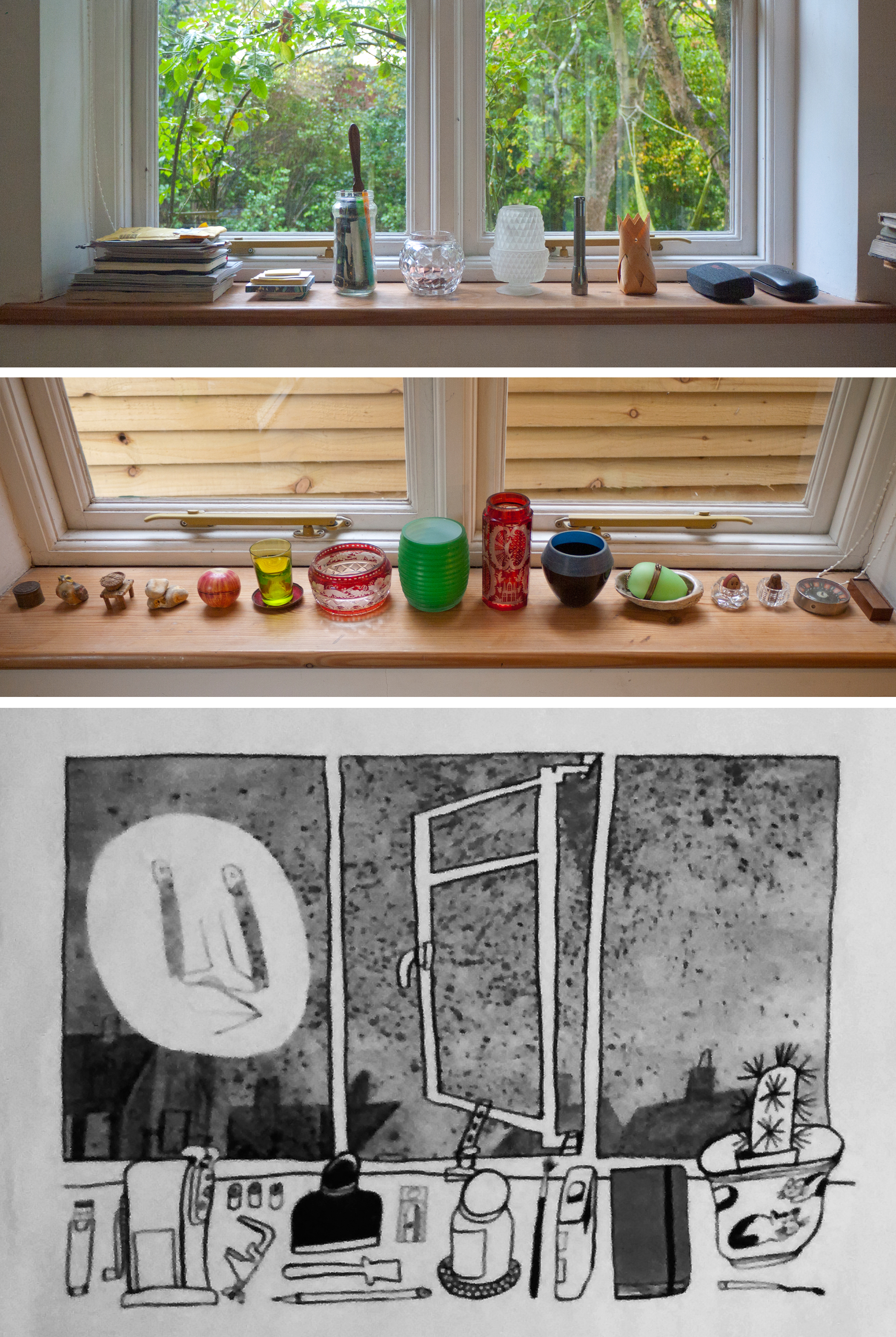
Above: The front of the studio with evidence of some work going on.Below: Window sill with useful things and window sill with arrangement of beautiful things.

Above: The front of the studio with evidence of some work going on.

Below: Window sill with useful things and window sill with arrangement of beautiful things.

Above: "Moon" by Rebecca Crompton 2011

Above: "Moon" by Rebecca Crompton 2011

I thought I should draw my beautiful window sill arrangement, but really couldn't be bothered to spend the time on it. One, because I've done enough of that type of drawing in my life and two, because some excellent examples of the genre have recently caught my eye. I love Rebecca Crompton's mainly useful things (above) laid out so carefully in the moonlight.

When I found my 1983 sketchbooks that contain the drawings that the row of plants in my tidy studio reminded me of, I realised that some of the plants and indeed the pots are probably the same ones, inherited from my mother. I know I'm resistant to change, but this is getting ridiculous. And no need for me to draw them again. 

Top: Two pages of pot plants from my 1983 sketchbookBottom: "Bathroom Window" watercolour by Augusta Ward, 2015

Top: Two pages of pot plants from my 1983 sketchbook

Bottom: "Bathroom Window" watercolour by Augusta Ward, 2015

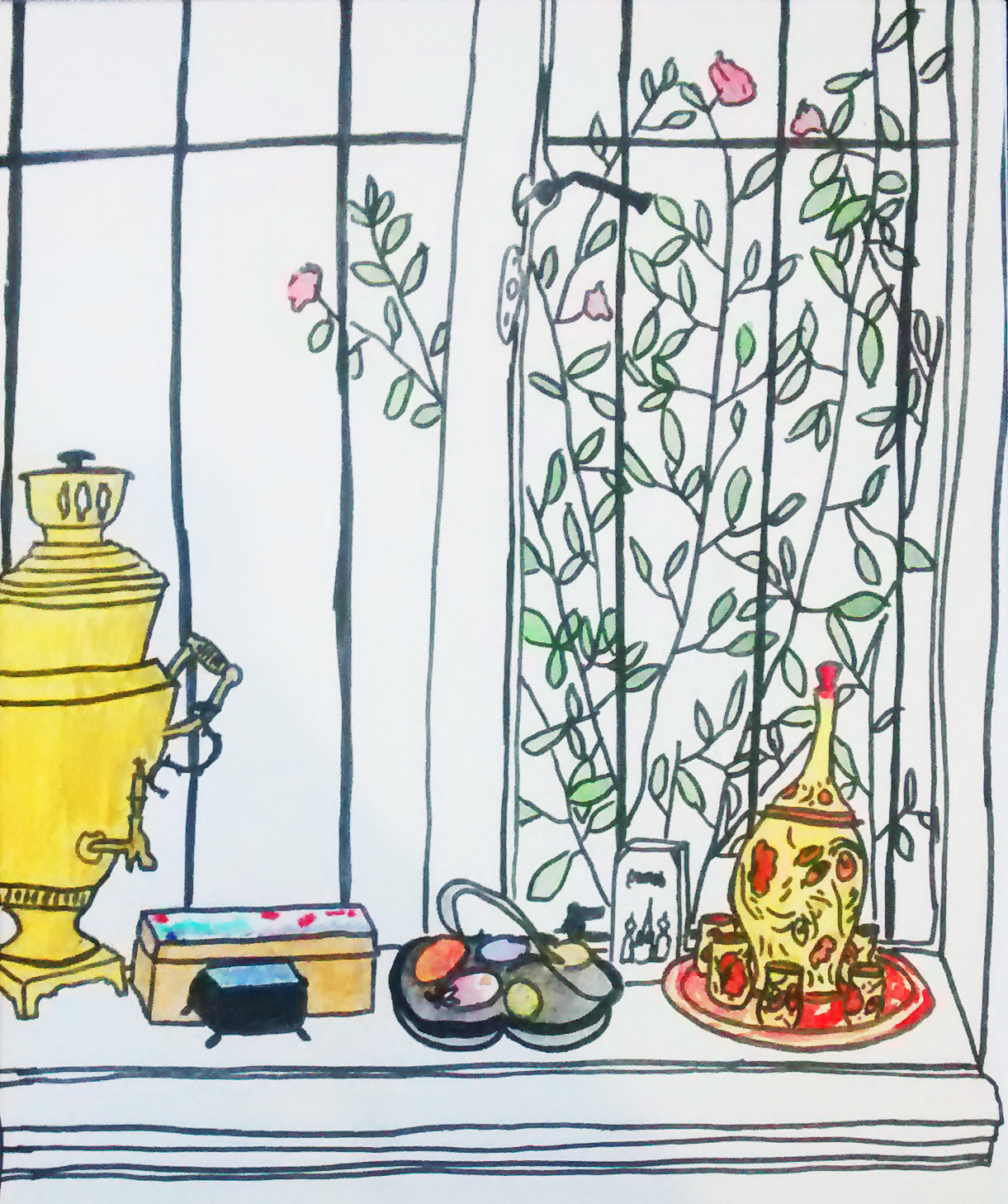
In a series of rich observational drawings, Augusta Ward records the window sills and corners of a room lovingly filled with possessions. The plants and things (above and below), displayed in a similar fashion to mine, are drawn in a fresh and breezy style.

Window sill by Augusta Ward 2015

Window sill by Augusta Ward 2015

Many Sided Shapes by Sasha Ward

Exterior and interior of the first floor, Ariana Museum, Geneva.

Exterior and interior of the first floor, Ariana Museum, Geneva.

Ariana Museum, Geneva, was built by Gustave Revilliod in the late nineteenth century to house his art collection and named after his mother. Now it is a museum of ceramics and glass with an exhibition "Harmony in Glass" by the British artist Anna Dickinson with whom I studied at The Royal College of Art in the 1980s. The building's neo-classical/baroque curves, quite different on the inside and the outside, and the glimpses of some complicated high level stained glass through the first floor windows started me thinking about shapes even before seeing Anna's fantastic retrospective. 

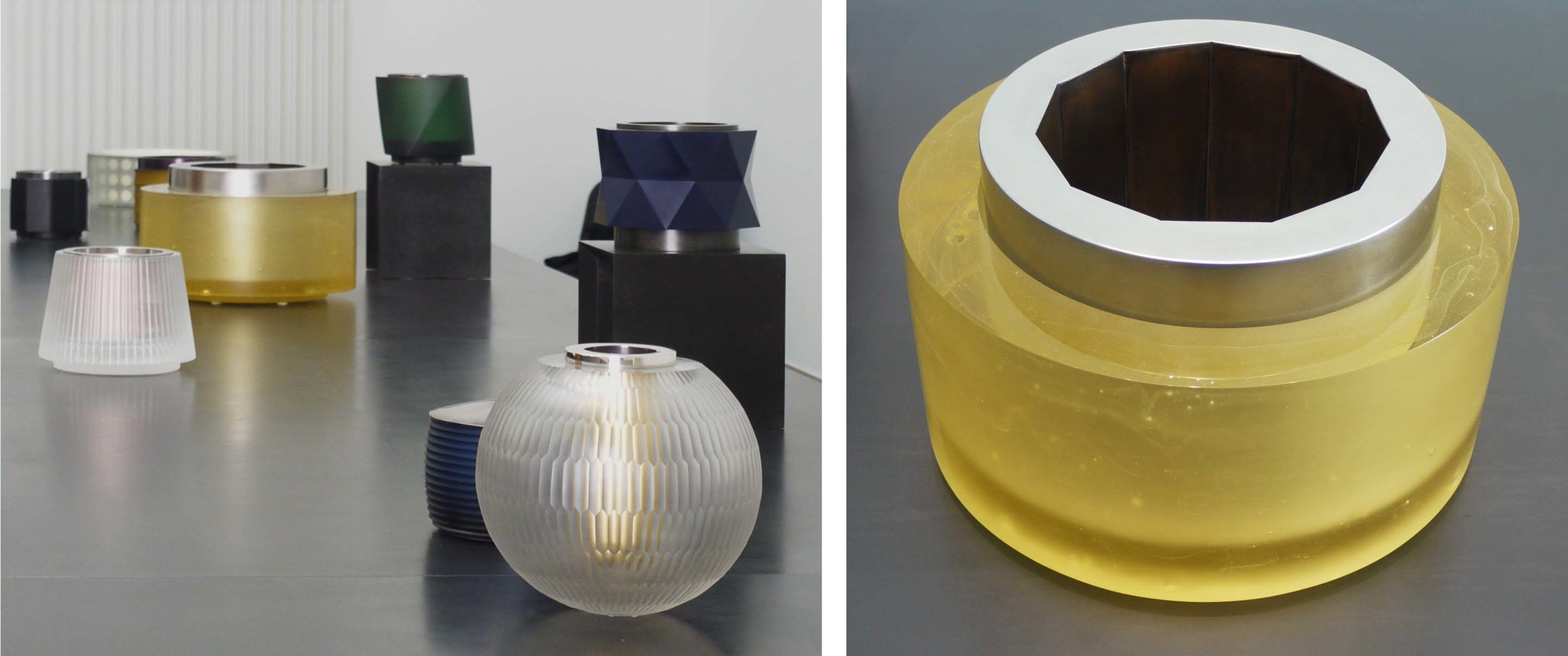
Left: A quarter of Anna Dickinson's exhibition "Harmony in Glass" on until 1st November.   Right: Cast Yellow Vessel with a Hendecagon Steel Liner 2010   

Left: A quarter of Anna Dickinson's exhibition "Harmony in Glass" on until 1st November.   Right: Cast Yellow Vessel with a Hendecagon Steel Liner 2010   

I am keen on counting, and have had discussions with Anna before about how many sides we like our shapes to have. In Anna's work, there is often a shape that makes a tessellating pattern over the surface of the glass vessel which may have a circular metal liner. In the yellow piece shown above, the reverse is true as the eleven sided shape is on the inside. The odd numbered shapes are the ones that interested me, sometimes they are more difficult to photograph, looking odd in both senses of the word.

So here is the number count in this exhibition:  

3 sides - 1 : 7 sides - 1 : 8 sides : 2 : 9 sides - 1 : 10 sides - 3 : 11 sides - 2 : 15 sides -1.  All the others are either circular or have facets that are too numerous to count in the round, reminding me how much more complicated the geometry is for an artist who works with three dimensions.

Clear Frit Vessel (9 sides) 2014                  Green Triangles (10 sides) 2014                                Green …

Clear Frit Vessel (9 sides) 2014                  Green Triangles (10 sides) 2014                                Green Twist (3 sides) 2011

The museum also has a great display of medieval stained glass, including the rose window, below left, number count as follows: outer window - 8 : main circle - 12 : centre - 4.

I wanted to contrast that versatile dodecagon with my own round glass commission for Dewsbury Health Centre, below right. As this is a hanging piece, there were no geometrical constraints based on glazing bars. The inner shape has 6 sides, the outer shape is flying out of the circle and has a piece taken out of it but it would have 7 sides.

Wall of medieval glass in Ariana Museum                             Hanging panel, Dewsbury Health Centre, 2006

Wall of medieval glass in Ariana Museum                             Hanging panel, Dewsbury Health Centre, 2006