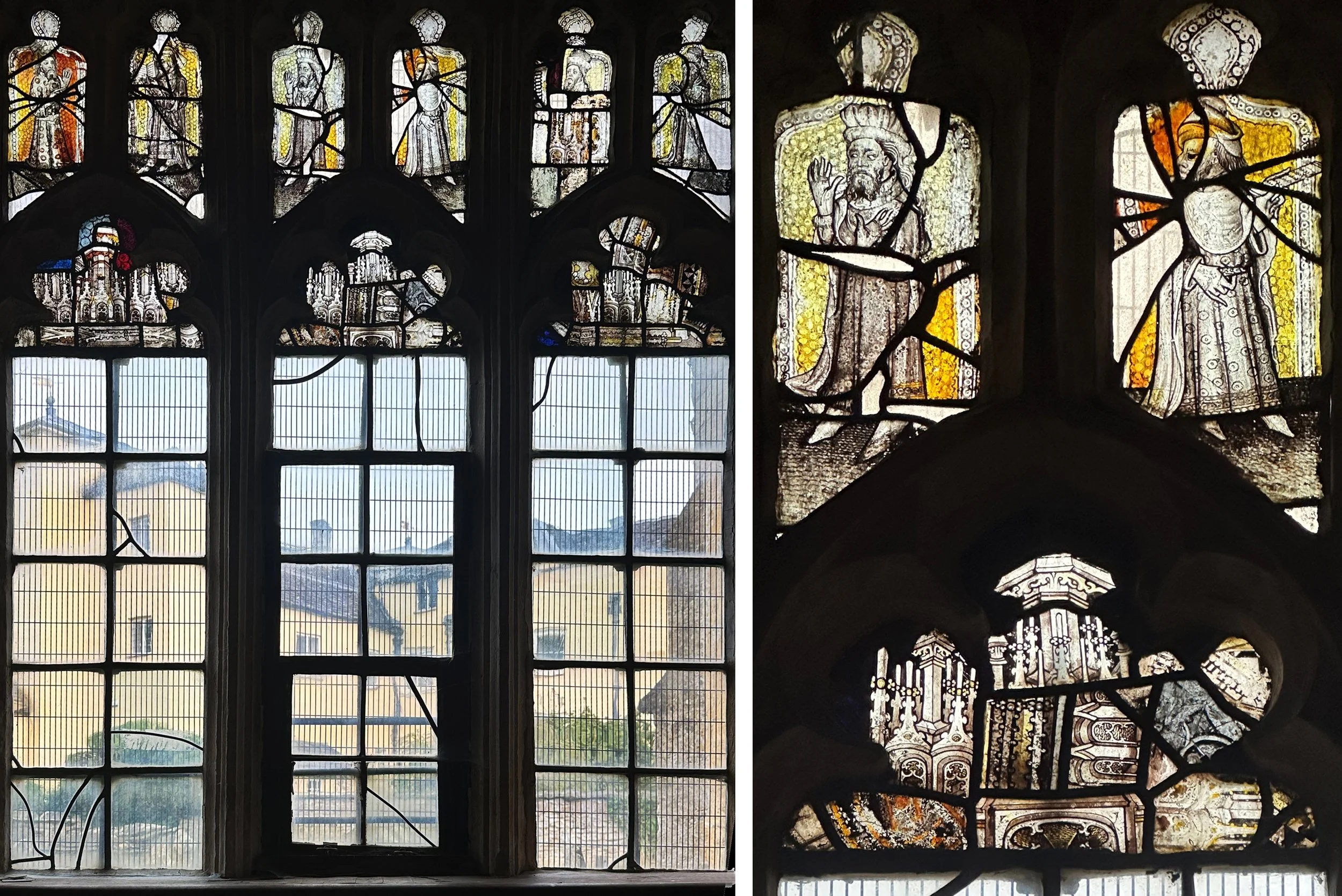
St Mary’s Church, Lydiard Tregoze, Wiltshire. Window with C16th glass fragments.
St Mary’s Church in Lydiard Tregoze on the western edge of Swindon contains some of the best medieval stained glass in Wiltshire. The church has recently benefiited from a £1 miilion conservation project supported by The National Lottery Heritage Fund, and when I visited last week there were the robed figures (above) and the pink and yellow angels (below) that I remembered, with views of Lydiard House and Park seen through grills in the windows underneath them.
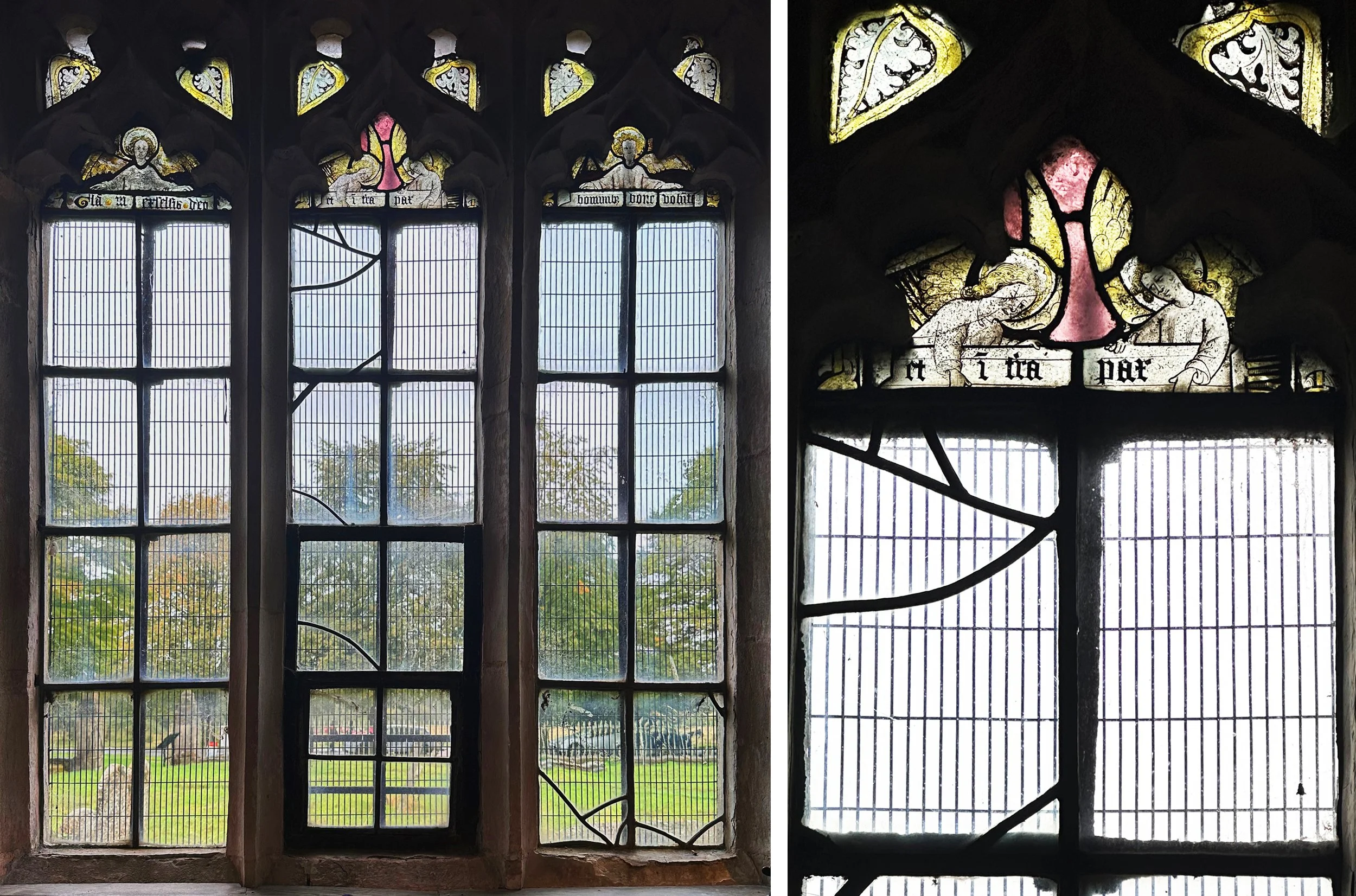
St Mary’s Church, Lydiard Tregoze, Wiltshire. Window with C16th glass fragments.
There are echoes of the tree you can see through the angel window in the one that fills the central light of the Van Linge east window (below). This tree is a more realistic one that the trees in stained glass that I’ve written about before here, although it’s an olive tree and not the shape that I would expect it to be. Still, it’s nice to see a tree with coats of arms nestling geometrically in its branches filling the space where you might expect to find a figure.
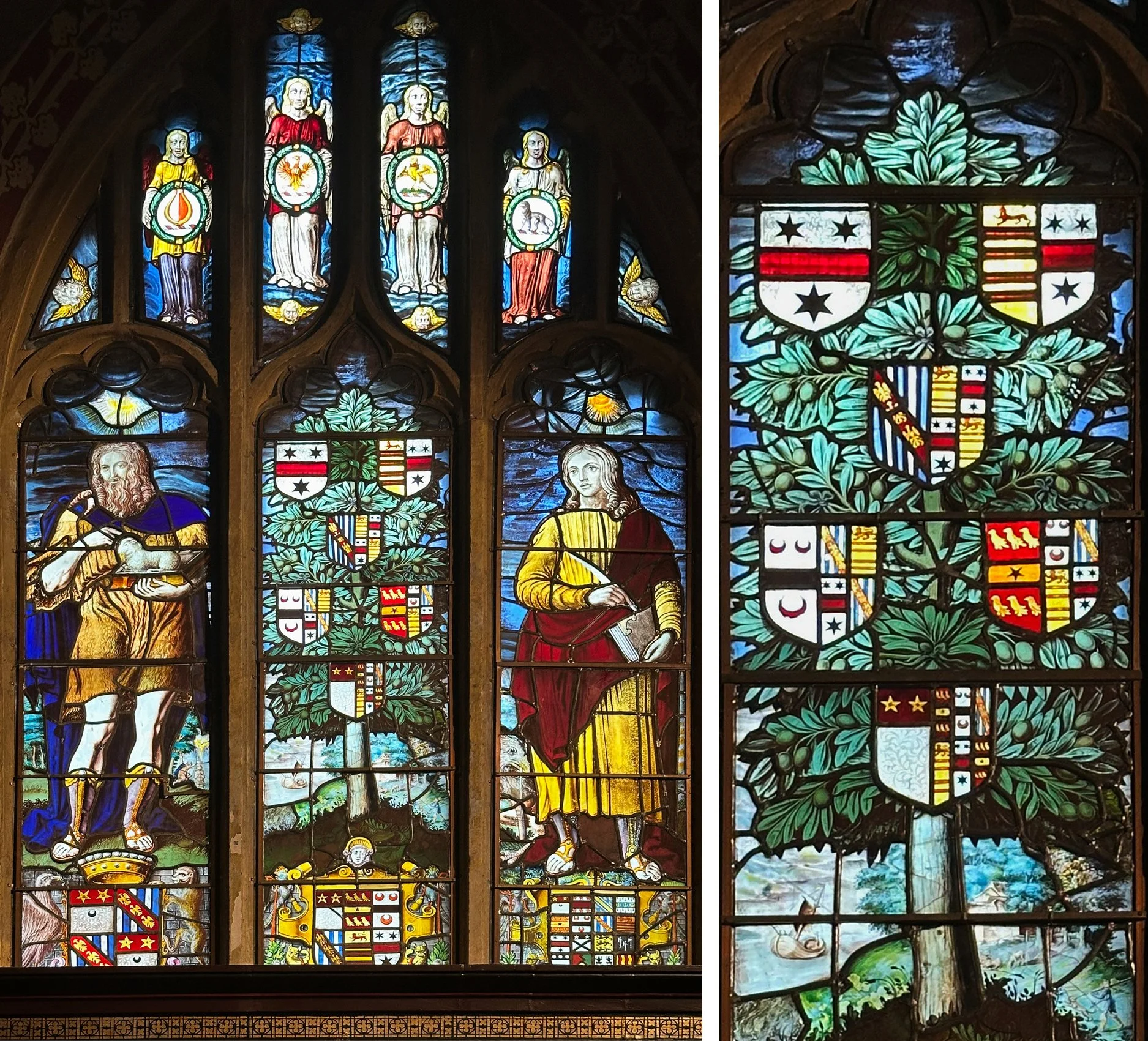
East window at Lydiard Tregoze Church by Abraham Van Linge 1633.
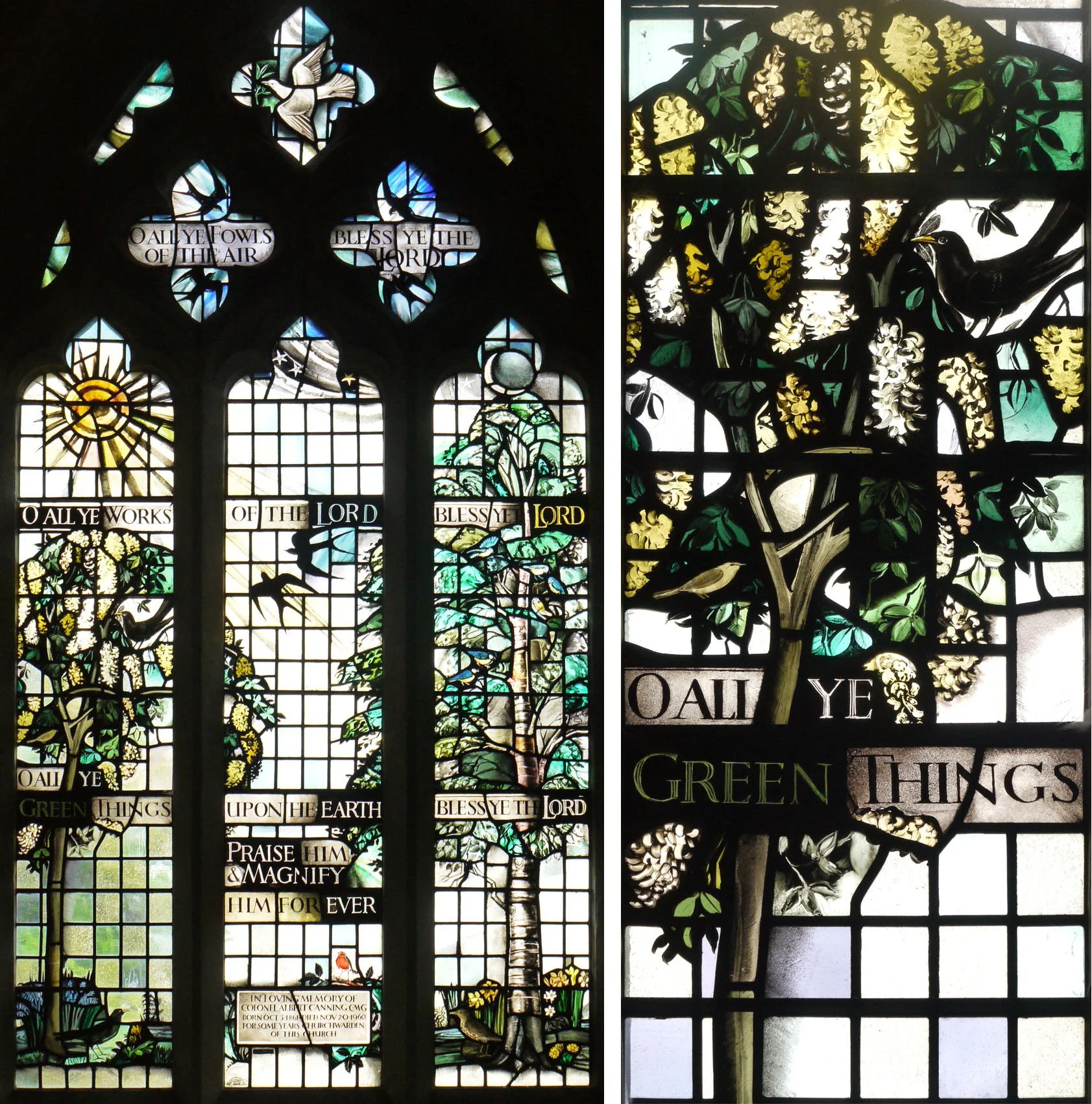
Window by M.E.A. Rope 1964, in All Saints Church, Lydiard Millicent, Wiltshire.
In the church in the next village, Lydiard Millicent, is a 1960s window by Margaret Edith Aldrich Rope (the younger of the two Margaret Ropes) in praise of nature. I’ve used her painting of a blackbird in this window many times (below left) to show how to paint a bird, not using lead to make its shape but instead painting across the lead lines to create a bird that looks as if it could move and fly. The trees seem well observed too, maybe a laburnum on the left and a silver birch on the right with more birds hidden among the foliage. In contrast to the Van Linge window, the central light is left empty allowing the trees on either side to spill over and take up a natural shape. When you start drawing trees you realise that they are mostly as wide as they are tall and not like a tall, thin window light.
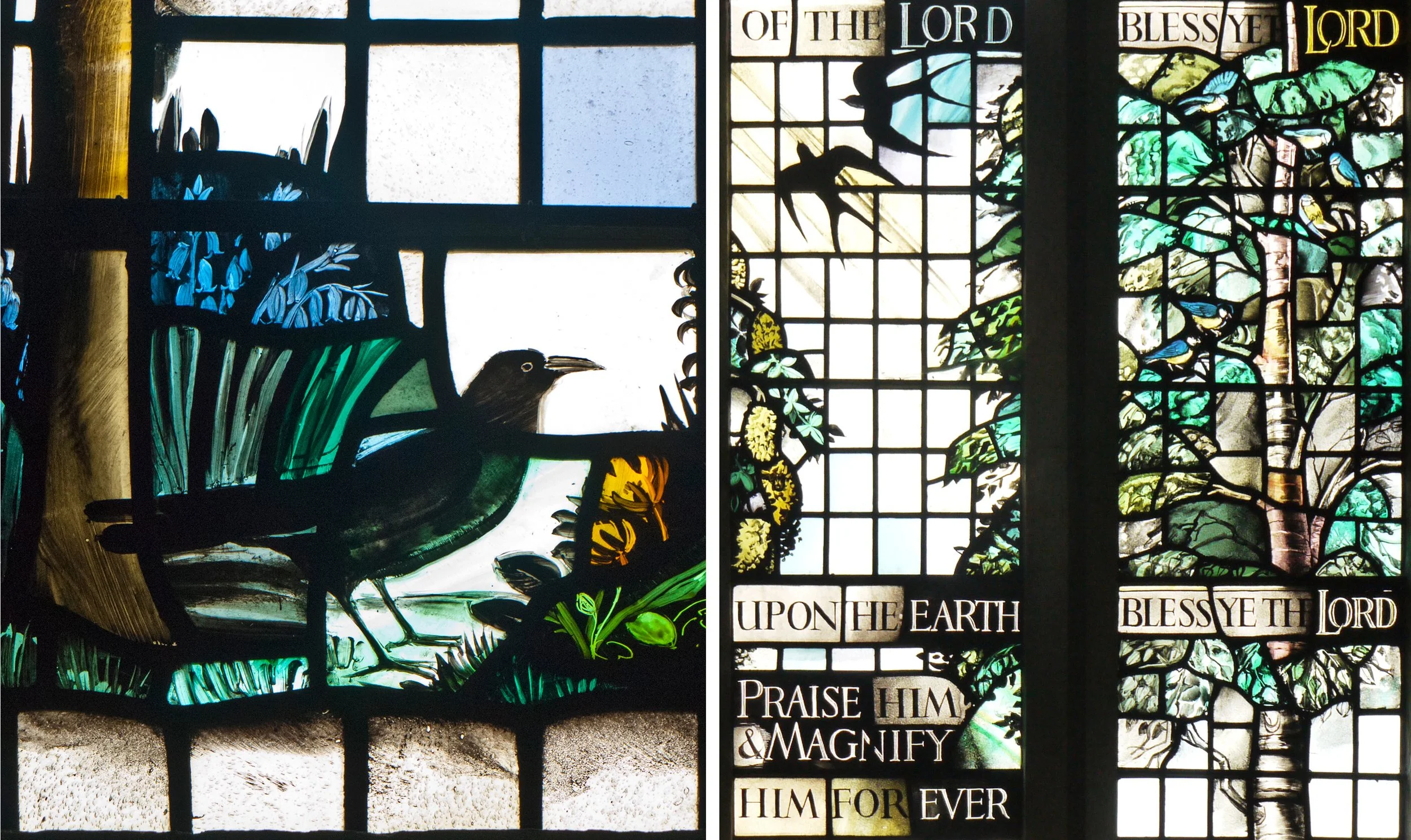
Details from All Saints, Lydiard Millicent.
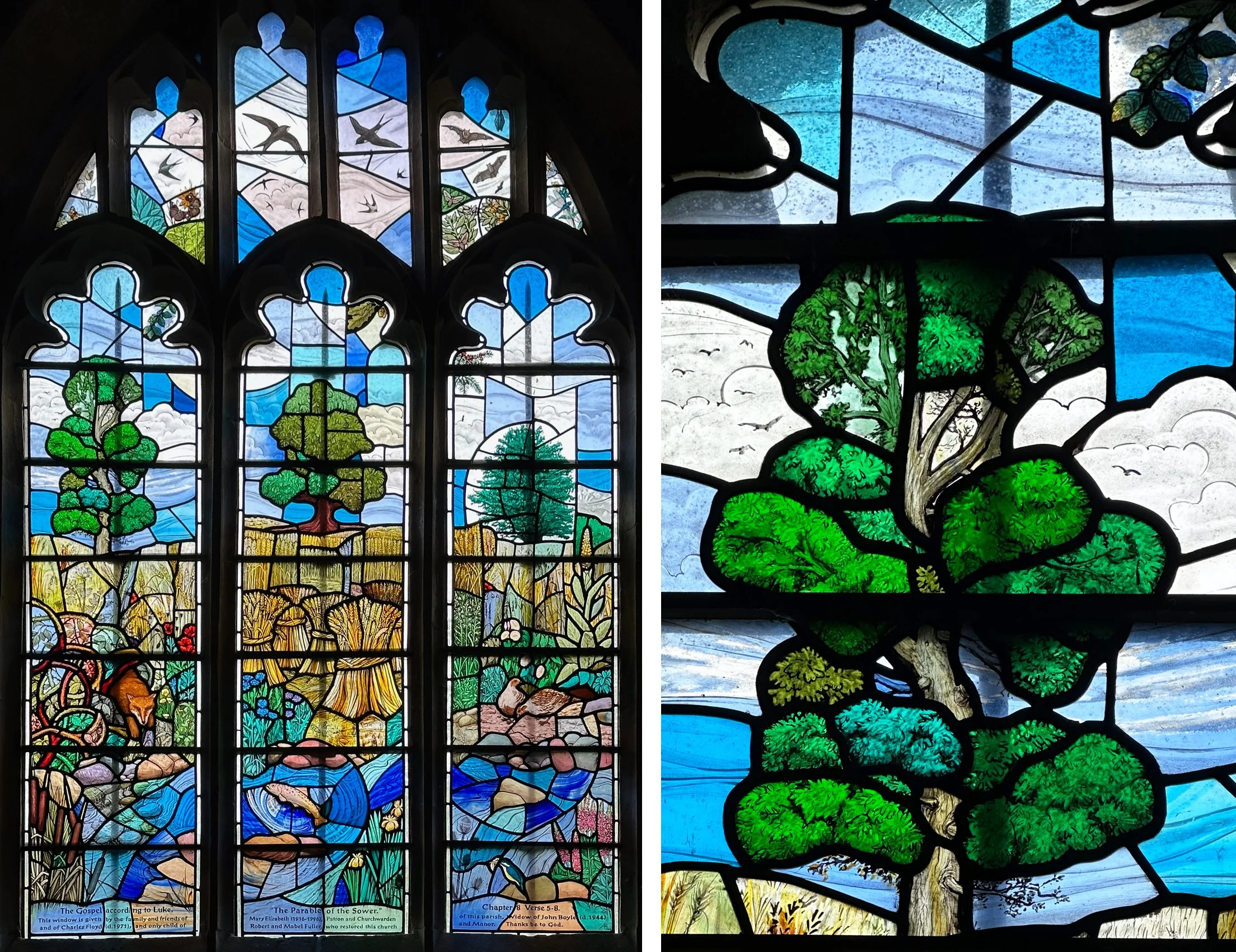
The Parable of the Sower window by Andrew Taylor 1999, in All Saints Church, Great Chalfield, Wiltshire.
Further west, in All Saints Church, Great Chalfield, is one of the many windows in Wiltshire by Andrew Taylor. The trees in this one are well observed too, and in my eyes are the most succesful part of the Parable of the Sower window (above), Taylor is also a landscape painter. On the right we have maybe a fir tree, definitely an oak in the middle and probably a beech on the left. This tree is a cross between a realistic tree and one that uses the patterned clump of leaves technique that you find in both medieval and victorian stained glass.
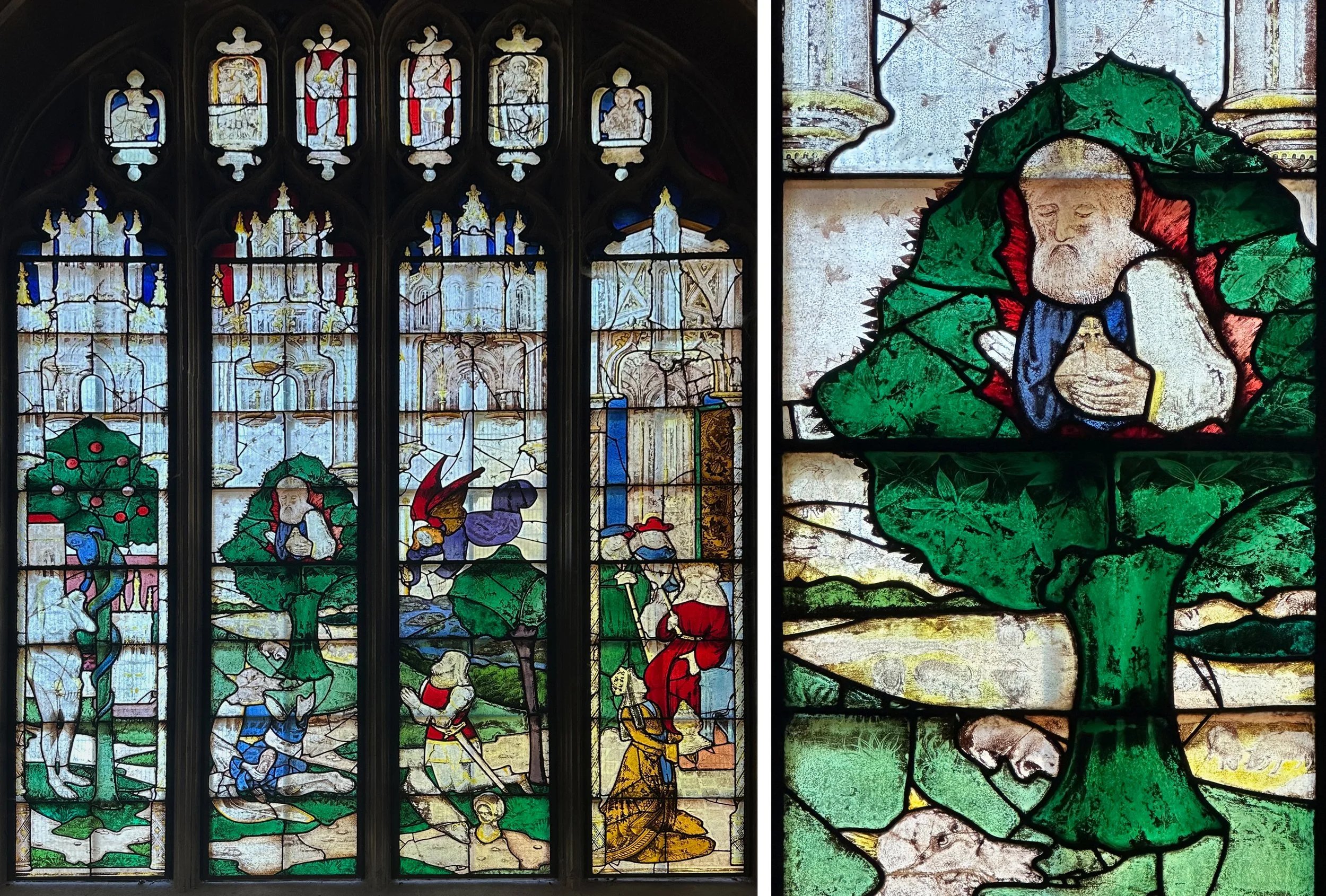
St Mary’s Church, Fairford: The Old Testament window and detail of The Burning Bush. Early C16th glass.
Always on the look out for those types of tree, I found some strong examples in St Mary’s Church Fairford, Gloucestershire, where every window contains some pieces of medieval glass. There is the apple tree in The Garden of Eden (above) and in the next light the burning bush in which God revealed himself to Moses. The detail shows red glass for the burning centre of the bush and little silver triangles all around the edge of the outer lead. The three tress in this window create a diagonal design that stands out because of the deterioration in the paintwork on the surrounding glass pieces. Then there is half a tree that fills two window lights with dark green glass and has an angel hovering in front of it and above the scene of The Flight into Egypt (below). This one uses what I call the clump technique, emphasised by that worn away painted detail.
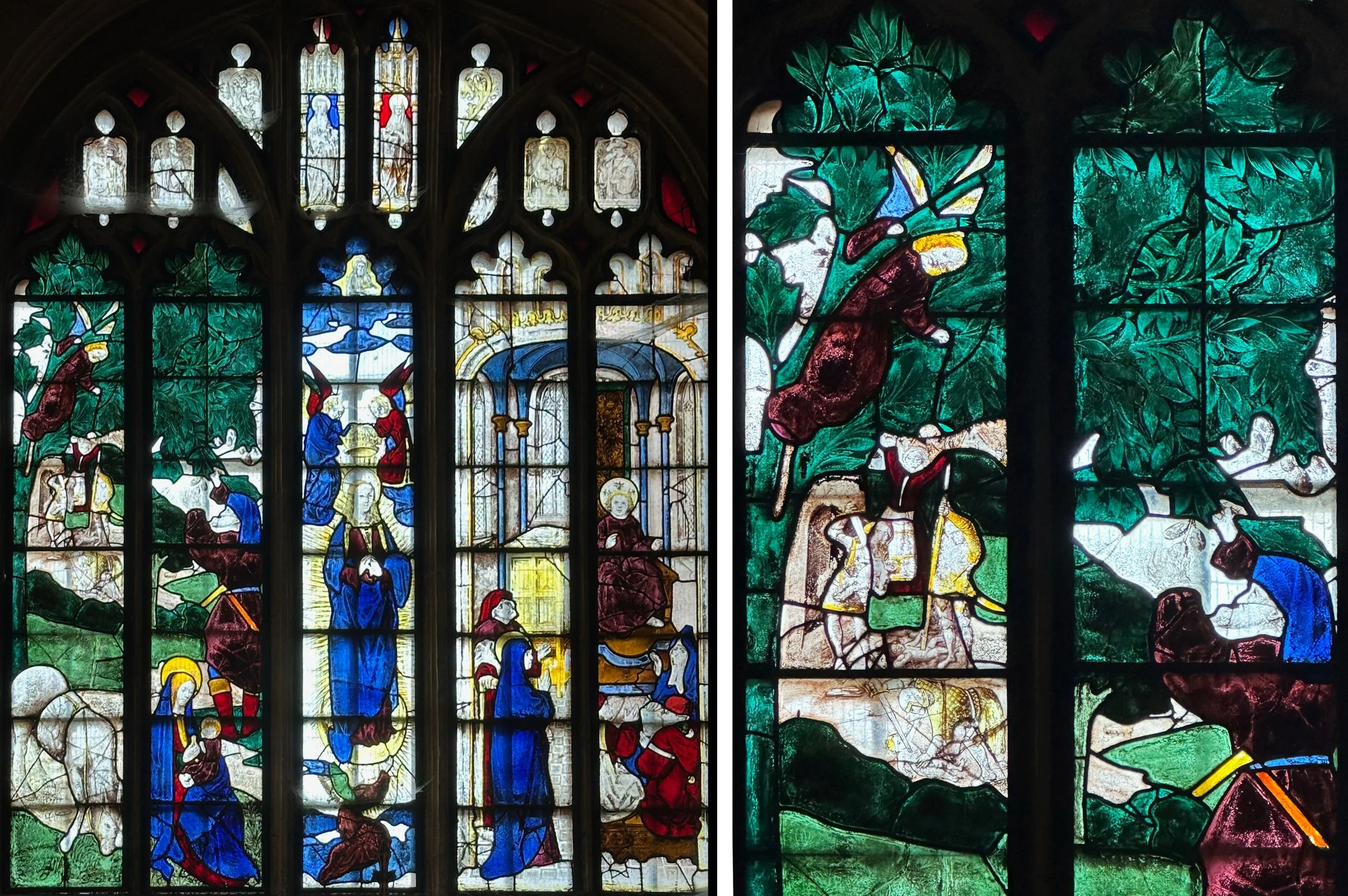
St Mary’s Church, Fairford: The Child Christ window and detail of The Flight into Egypt. Early C16th glass.
Like the windows at Lydiard Tregoze these ones have been expertly repaired and conserved by the workshops at Canterbury Cathedral and Keith Barley Studios respectively. The effect of all the cleaning, mending, replacing and protecting the glass pieces over the years has left a set of windows that appear fragmentary in their design, with faded traces of architecture against slabs of bright blue, green, amber and purple. All around the church the light comes in through the white glass backgrounds with parts of buildings, plants and figures standing out and giving to this series of 28 windows a new and different life.
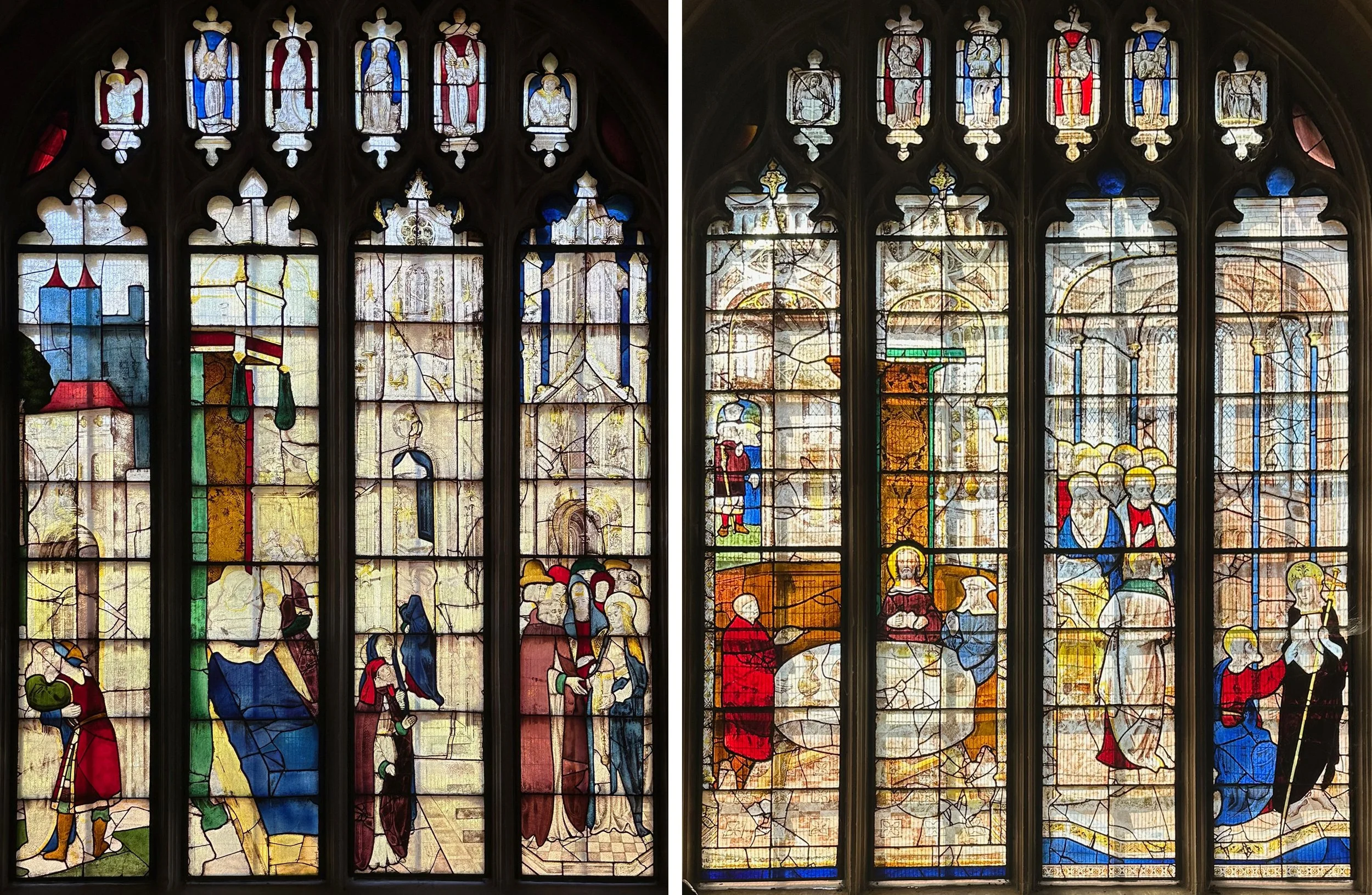
Fairford: Left The Virgin Mary window (north facing). Right: The Risen Christ window (south facing).